
By Minimally Invasive Specialists of Texas
Minimally invasive medicine is changing the way many conditions are diagnosed and treated. Interventional radiology (IR) is at the forefront of this transformation, offering procedures that often require only tiny incisions, less recovery time, and fewer complications than traditional surgery. Whether you’re dealing with pain, vascular issues, or certain cancers, understanding how IR works can empower you to make informed healthcare decisions.
Understanding Interventional Radiology
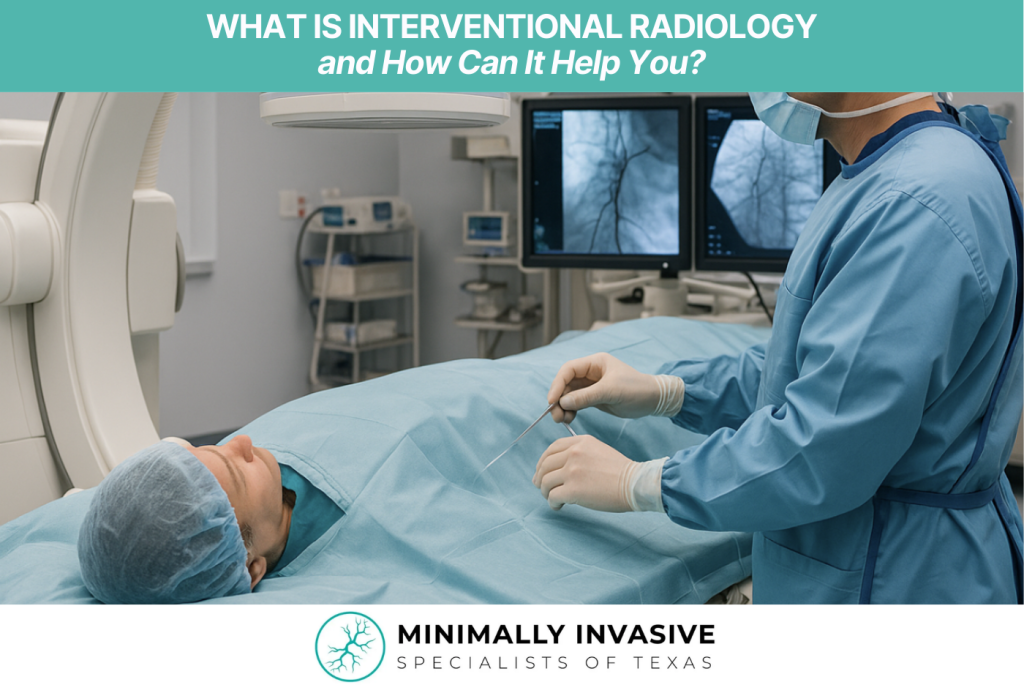
Interventional radiology is a medical specialty that uses imaging technology—such as ultrasound, CT scans, X-rays, or MRI—to guide small instruments like catheters or needles through the body. By using these real-time images, interventional radiologists can both diagnose and treat a wide variety of conditions without the need for large surgical incisions.
Common Conditions Treated with IR Include:
- Uterine fibroids
- Varicose veins and venous insufficiency
- Peripheral artery disease
- Chronic pain (such as back or joint pain)
- Certain cancers (liver, kidney, lung)
- Benign prostatic hyperplasia (BPH)
- Compression fractures
Because these treatments are minimally invasive, most procedures are performed on an outpatient basis, allowing patients to return home the same day.
Key Advantages of IR
- Minimally Invasive: Tiny incisions mean less scarring and reduced risk of infection.
- Faster Recovery: Many patients return to normal activities within days rather than weeks.
- Lower Risk: With less anesthesia and trauma to the body, complications are generally fewer than with open surgery.
- Precision: Imaging guidance allows pinpoint accuracy for treatment.
What to Expect During an IR Procedure
- Consultation & Imaging: Your interventional radiologist reviews your health history and imaging results.
- Local Anesthesia & Sedation: Most procedures require only mild sedation and local numbing.
- Image-Guided Treatment: Using real-time imaging, the radiologist inserts a small catheter or needle to perform the treatment.
- Recovery: Patients typically rest briefly and can go home the same day with minimal downtime.
Comprehensive Q&A
Q: How do I know if I’m a candidate for interventional radiology?
A: Most patients with conditions treatable by IR are candidates. A consultation and review of imaging studies will confirm whether a minimally invasive approach is right for you.
Q: Is interventional radiology painful?
A: Procedures usually involve only local anesthesia and light sedation, resulting in little to no pain during treatment. Mild soreness afterward is common but manageable.
Q: What is the recovery time?
A: Recovery varies by procedure, but many patients return to daily activities within 24–72 hours.
Q: Are IR procedures as effective as traditional surgery?
A: For many conditions, IR procedures are just as effective—sometimes even more so—because of their targeted precision and reduced trauma.
Q: Will insurance cover these treatments?
A: Most IR procedures are covered by insurance when medically necessary. Our team can help verify your benefits before scheduling.
Contact Minimally Invasive Specialists of Texas
Minimally Invasive Specialists of Texas
4003 Woodlawn Ave
Pasadena, TX 77504
Phone: (832) 583-2246
Our experienced interventional radiologists are dedicated to providing advanced, patient-centered care. Call today to schedule a consultation and learn how minimally invasive treatments can help you heal faster and live better.
Ready to explore how interventional radiology can help you? Reach out to our Pasadena office to discuss personalized, state-of-the-art treatment options.