
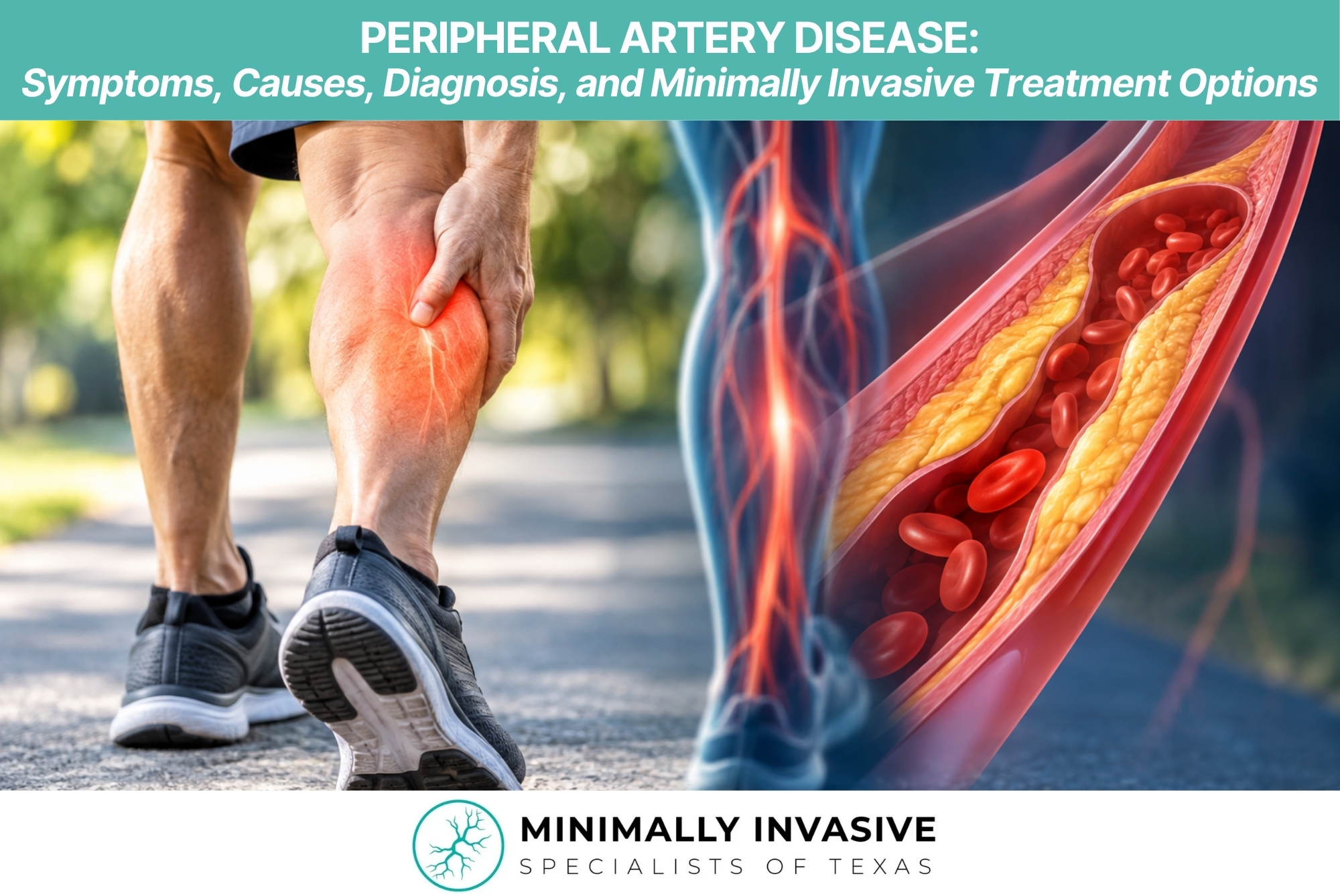
Peripheral artery disease (PAD) is a common circulatory condition in which narrowed or blocked arteries reduce blood flow to the limbs, most often the legs. Although leg discomfort may be the first noticeable symptom, PAD is more than a problem affecting the legs. It is a form of atherosclerotic cardiovascular disease and can be an important indicator of a person’s overall vascular health.
At Minimally Invasive Specialists of Texas, patients can receive evaluation and treatment for peripheral artery disease with an emphasis on identifying circulation problems and determining appropriate treatment options. Depending on the severity and location of arterial disease, treatment may include lifestyle changes, medical management, and minimally invasive vascular procedures designed to improve blood flow.
Understanding the warning signs of PAD is important because early diagnosis may help reduce complications, preserve mobility, and identify patients who may also have an increased risk of cardiovascular disease.
What Is Peripheral Artery Disease?
Peripheral artery disease occurs when arteries outside the heart become narrowed or obstructed. PAD most commonly affects arteries supplying the legs and feet.
Understanding Atherosclerosis
The leading underlying process associated with PAD is atherosclerosis, the buildup of plaque within arterial walls. Plaque contains cholesterol, fats, calcium, inflammatory cells, and other substances. Over time, plaque can narrow an artery and restrict the amount of oxygen-rich blood reaching tissues beyond the blockage.
When muscles do not receive enough blood during physical activity, patients may experience pain, cramping, heaviness, weakness, or fatigue.
PAD can range from mild disease that produces few noticeable symptoms to severe disease that threatens the health of the affected limb.
What Are the Symptoms of Peripheral Artery Disease?
PAD symptoms vary considerably. Some people have classic symptoms, while others experience subtle discomfort or no obvious symptoms at all.
Leg Pain While Walking
One of the best-known symptoms of PAD is intermittent claudication. This refers to muscle discomfort that develops during activity because the working muscles require more oxygen-rich blood than narrowed arteries can deliver.
A person may notice cramping, aching, heaviness, tightness, or fatigue in the calf, thigh, hip, or buttock while walking. The discomfort often improves after several minutes of rest and returns when activity resumes.
Additional PAD Symptoms
Other potential signs and symptoms can include:
- Leg or foot numbness or weakness
- One foot feeling colder than the other
- Reduced or absent pulses in the feet
- Shiny or unusually smooth skin on the legs
- Changes in skin color
- Loss or slower growth of hair on the legs
- Slow-growing toenails
- Wounds on the toes, feet, or legs that heal slowly
- Pain in the feet or toes while resting
- Erectile dysfunction in some men
Symptoms involving wounds, persistent rest pain, or tissue changes require prompt medical attention because they may indicate advanced disease.
Why Peripheral Artery Disease Should Not Be Ignored
PAD is important for two major reasons: it can compromise circulation to the legs, and it can signal atherosclerosis elsewhere in the body.
PAD Is a Cardiovascular Disease
Atherosclerosis is not necessarily confined to one artery or one part of the body. A patient diagnosed with PAD may also have atherosclerotic disease affecting arteries that supply the heart or brain.
For this reason, identifying PAD provides an opportunity to address cardiovascular risk factors rather than treating leg symptoms in isolation.
Severe PAD Can Threaten the Limb
Advanced PAD can result in significantly reduced blood flow even when a person is resting. Severe ischemia may cause persistent foot pain, wounds that do not heal, infections, and tissue damage.
Modern terminology increasingly describes severe limb-threatening disease as chronic limb-threatening ischemia (CLTI). Early vascular evaluation is particularly important when patients develop nonhealing wounds, rest pain, or tissue loss.
What Causes Peripheral Artery Disease?
Atherosclerosis is the most common cause of PAD. However, several factors can increase the likelihood of developing arterial disease.
Smoking and Tobacco Exposure
Smoking is one of the most significant modifiable risk factors for PAD. Tobacco exposure damages blood vessels, contributes to inflammation, and accelerates atherosclerosis.
Stopping smoking is therefore an important component of PAD management.
Diabetes
Diabetes can damage blood vessels and is strongly associated with PAD. Patients with diabetes may also develop peripheral neuropathy, which can reduce sensation in the feet.
The combination of poor circulation and decreased sensation can make foot injuries particularly concerning because a patient may not immediately notice a wound.
High Cholesterol
Elevated cholesterol contributes to plaque formation within arteries. Managing cholesterol is an important part of reducing cardiovascular risk in people with atherosclerotic disease.
High Blood Pressure
Chronic high blood pressure can damage arterial walls and contribute to vascular disease.
Age and Other Risk Factors
PAD becomes more common with age. Other factors may include a personal or family history of cardiovascular disease, kidney disease, obesity, physical inactivity, and other conditions associated with atherosclerosis.
Having multiple risk factors can further increase a person’s likelihood of developing PAD.
How Is Peripheral Artery Disease Diagnosed?
Diagnosing PAD begins with a medical history and physical examination. A healthcare provider may ask about walking-related symptoms, cardiovascular risk factors, smoking history, diabetes, wounds, and previous vascular or cardiac conditions.
Physical Examination
The examination may include evaluating:
- Pulses in the legs and feet
- Skin temperature and color
- Wounds or areas of tissue damage
- Differences between the limbs
- Signs of reduced circulation
Additional vascular testing may then be recommended.
Ankle-Brachial Index
An ankle-brachial index (ABI) compares blood pressure measured at the ankle with blood pressure measured in the arm.
A lower-than-expected ankle pressure can suggest reduced arterial circulation in the legs. In some patients, additional testing may be necessary when resting ABI measurements are normal despite symptoms or when arteries are difficult to compress.
Ultrasound
Duplex ultrasound uses sound waves to evaluate blood flow and visualize arteries. It can help identify areas of narrowing or obstruction without exposing the patient to ionizing radiation.
CT Angiography and MR Angiography
Computed tomography angiography (CTA) and magnetic resonance angiography (MRA) can provide detailed images of the vascular system when more precise anatomical information is needed.
Catheter Angiography
Angiography may be used when detailed visualization of an arterial blockage is necessary, particularly when a minimally invasive treatment is being considered.
Contrast material is introduced into the vascular system so the physician can visualize the affected arteries using medical imaging.
How Is Peripheral Artery Disease Treated?
PAD treatment should be individualized according to symptoms, disease severity, overall cardiovascular risk, and the location and extent of arterial narrowing.
Treatment frequently has two complementary goals: improving limb-related symptoms and reducing the patient’s broader cardiovascular risk.
Lifestyle and Medical Management for PAD
Not every patient with PAD requires an intervention. For many patients, comprehensive medical management is a fundamental part of treatment.
Smoking Cessation
Patients who smoke should receive support for smoking cessation. Stopping tobacco use can substantially benefit vascular and overall cardiovascular health.
Exercise Therapy
Structured walking and exercise programs can improve walking ability and functional capacity in many people with symptomatic PAD.
A typical walking program alternates periods of walking with rest. Over time, patients may gradually increase their walking duration and distance under appropriate medical guidance.
Managing Cholesterol, Blood Pressure, and Diabetes
Managing cardiovascular risk factors is essential. Depending on the individual, treatment may include medications for cholesterol, blood pressure, diabetes, or prevention of cardiovascular complications.
Medication decisions should be individualized by the patient’s healthcare provider.
Foot Care
Patients with PAD—particularly those who also have diabetes—should pay careful attention to their feet.
Cuts, blisters, sores, or other injuries may heal more slowly when circulation is impaired. Patients should seek medical evaluation for wounds that do not improve appropriately.
When Are Minimally Invasive PAD Treatments Considered?
Some patients continue to experience significant symptoms despite appropriate medical therapy and exercise. Others may have advanced disease that compromises the health of the limb.
In these situations, restoring blood flow through revascularization may be considered.
Angioplasty
During angioplasty, a physician guides a thin catheter through the vascular system to the narrowed portion of the artery. A small balloon can then be inflated to widen the affected area and improve blood flow.
Stent Placement
In selected cases, a stent may be placed within the artery to help maintain an open pathway for blood flow.
Whether a stent is appropriate depends on factors such as the artery involved, characteristics of the blockage, and the patient’s overall condition.
Atherectomy
Atherectomy is a catheter-based technique used in selected patients to remove or modify plaque from within an artery.
The decision to use atherectomy depends on the location and characteristics of the arterial disease and the treatment strategy selected by the vascular specialist.
Other Endovascular Techniques
Modern endovascular treatment may involve different types of balloons, stents, plaque-modification technologies, or combinations of techniques. Treatment planning is based on the patient’s vascular anatomy, symptoms, medical history, and clinical goals.
Benefits of Minimally Invasive PAD Treatment
When clinically appropriate, catheter-based vascular procedures may offer several advantages compared with traditional open surgery.
Smaller Access Sites
Endovascular procedures are generally performed through a small vascular access point rather than a large surgical incision.
Potentially Faster Recovery
Many patients can resume normal activities more quickly following minimally invasive procedures, although recovery varies according to the procedure and the patient’s health.
Targeted Treatment
Image-guided technology allows specialists to navigate through the vascular system and treat specific areas of arterial narrowing or blockage.
Treatment Is Personalized
Not every blockage requires intervention, and no single procedure is best for every patient. A careful vascular evaluation helps determine whether conservative management, an endovascular procedure, open surgery, or another approach is most appropriate.
Peripheral Artery Disease and Nonhealing Wounds
A sore on the foot or leg that fails to heal can sometimes be a sign of inadequate arterial blood flow.
Why Circulation Matters for Wound Healing
Healing requires oxygen and nutrients delivered through the bloodstream. When arterial circulation is significantly impaired, injured tissue may not receive enough oxygen-rich blood to heal normally.
Patients with PAD and diabetes can face additional challenges because neuropathy may make foot injuries less noticeable.
A vascular evaluation can help determine whether poor arterial circulation is contributing to a chronic wound.
When Should You Seek Medical Attention for PAD Symptoms?
Patients should discuss recurring leg pain, cramping, weakness, or fatigue with a healthcare provider, particularly when symptoms consistently occur while walking.
More urgent evaluation may be necessary for:
- Persistent foot or toe pain at rest
- A foot that suddenly becomes cold, pale, numb, or weak
- New discoloration
- Nonhealing ulcers or wounds
- Blackened or dying tissue
- Sudden severe leg pain
A sudden loss of circulation to a limb can represent an emergency and requires immediate medical attention.
Living With Peripheral Artery Disease
PAD is a chronic vascular condition, but appropriate management can help many patients remain active and protect their long-term health.
Long-Term Management Matters
Treatment does not end when symptoms improve or after a vascular procedure. Long-term management may include exercise, smoking cessation, medication adherence, diabetes management, cholesterol control, blood pressure management, healthy eating, and regular follow-up.
Patients who undergo revascularization may also need ongoing surveillance to evaluate circulation and treatment results.
Frequently Asked Questions About Peripheral Artery Disease
Is peripheral artery disease the same as poor circulation?
PAD is one important cause of poor circulation, but the terms are not identical. PAD specifically involves narrowing or blockage of arteries supplying areas outside the heart, most commonly the legs. Other medical conditions can also affect circulation.
What does PAD leg pain feel like?
Classic PAD discomfort may feel like aching, cramping, heaviness, tightness, weakness, or fatigue in the calf, thigh, hip, or buttock. It commonly develops with walking and improves with rest.
Can you have PAD without leg pain?
Yes. Some people with PAD have atypical symptoms, while others have no obvious symptoms. This is one reason risk-factor assessment and appropriate vascular testing can be important.
Does PAD affect one leg or both legs?
Either is possible. Atherosclerotic disease can affect arteries in one or both legs, and symptoms may be more pronounced on one side.
Can PAD cause numbness in the feet?
Reduced circulation may contribute to numbness or weakness. However, numbness can have many causes, including peripheral neuropathy and spinal or nerve disorders. A medical evaluation can help determine the underlying cause.
Why does my leg hurt when I walk but feel better when I stop?
This pattern can occur with intermittent claudication. During walking, muscles require increased blood flow. If an artery is significantly narrowed, circulation may not meet that increased demand, producing discomfort. Symptoms often improve when the muscles’ demand for blood decreases during rest.
Can PAD cause wounds that will not heal?
Yes. Significant arterial disease can reduce the oxygen and nutrients reaching an injured area, interfering with wound healing. A persistent wound on a toe, foot, or lower leg warrants medical attention.
Is peripheral artery disease dangerous?
PAD can become serious, particularly when circulation is severely compromised. It is also clinically important because PAD is associated with systemic atherosclerotic cardiovascular disease. Appropriate treatment should address both limb symptoms and overall cardiovascular risk.
Can walking really help PAD?
For many patients with chronic symptomatic PAD, structured exercise therapy can improve walking performance and quality of life. Exercise recommendations should be tailored to the patient’s overall health and disease severity.
Can PAD be reversed?
Atherosclerosis is generally considered a chronic disease. Treatment focuses on slowing its progression, controlling cardiovascular risk factors, improving symptoms, and restoring blood flow when necessary.
Does everyone with PAD need a stent?
No. Many patients are managed with exercise, lifestyle changes, and medications. Revascularization is generally considered when symptoms significantly affect quality of life despite appropriate therapy or when blood flow is inadequate to maintain tissue health.
How is a blocked leg artery opened without major surgery?
Endovascular procedures allow physicians to reach affected arteries through a small vascular access site using catheters and imaging guidance. Depending on the circumstances, treatment may involve angioplasty, stenting, atherectomy, or other vascular technologies.
What happens if peripheral artery disease is left untreated?
PAD may remain stable in some individuals, while it can progress in others. Progressive disease can lead to increasing walking limitations, rest pain, nonhealing wounds, tissue damage, and potentially limb-threatening complications. Untreated cardiovascular risk factors can also contribute to heart attack and stroke risk.
Should people with diabetes be screened for PAD?
Diabetes is an important risk factor for PAD. Whether and how an individual should be tested depends on age, symptoms, examination findings, and additional risk factors. Patients with diabetes should discuss their vascular health and foot care with their healthcare providers.
When should I see a vascular specialist?
A vascular evaluation may be appropriate when you experience recurring exertional leg symptoms, have abnormal circulation testing, develop a nonhealing foot or leg wound, experience rest pain, or have other signs suggesting inadequate arterial circulation.
Take the Next Step Toward Better Vascular Health
Peripheral artery disease should not be dismissed as an inevitable consequence of aging or simply being “out of shape.” Recurring leg discomfort during activity, nonhealing wounds, changes in foot temperature or color, and persistent foot pain can be warning signs of impaired arterial circulation.
Early evaluation can identify PAD, determine its severity, and help establish an individualized treatment strategy. For some patients, lifestyle changes, exercise, and medical management may be appropriate. For others, minimally invasive vascular treatment may help restore blood flow and improve symptoms.
Minimally Invasive Specialists of Texas provides evaluation and treatment options for patients experiencing symptoms associated with peripheral artery disease. If you are concerned about your circulation or have symptoms that may indicate PAD, schedule an evaluation to discuss the next appropriate step.
Contact Information
Pasadena Office
Minimally Invasive Specialists of Texas
4003 Woodlawn Ave
Pasadena, TX 77504
Call Us: (832) 583-2246
Fax: (832) 324-6846
Baytown Office
Minimally Invasive Specialists of Texas
1642 West Baker Rd, Suite C
Baytown, TX 77521
Call Us: (832) 583-2246
Fax: (832) 324-6846
Clear Lake Office
Minimally Invasive Specialists of Texas
2409 Falcon Pass #100
Houston, TX 77062
Call Us: (832) 583-2246
Fax: (832) 324-6846
Website: mist-health.com
Appointments: mist-health.com/appointments/