
Persistent back pain, neck pain, sciatica, and radiating nerve pain can make everyday activities difficult. When inflammation develops around a spinal nerve, patients may experience pain that extends beyond the spine into the arms, hands, buttocks, legs, or feet. For appropriately selected patients, epidural steroid injections may provide targeted relief by reducing inflammation around irritated spinal nerves.
At Minimally Invasive Specialists of Texas, epidural steroid injections may be incorporated into an individualized treatment plan for patients experiencing certain types of spine-related and nerve-related pain. These image-guided, minimally invasive procedures deliver anti-inflammatory medication into the epidural space surrounding spinal nerves.
Understanding why epidural steroid injections are performed, which conditions they may address, and what patients can expect can make it easier to have an informed conversation with a pain management specialist.
What Is an Epidural Steroid Injection?
An epidural steroid injection, commonly abbreviated as ESI, is a minimally invasive procedure used to deliver corticosteroid medication into the epidural space of the spine.
The epidural space is located around the spinal cord and spinal nerve roots. When a nerve root becomes irritated or inflamed because of conditions such as a herniated disc or spinal stenosis, symptoms may develop along the path of that nerve.
An epidural steroid injection is designed to place anti-inflammatory medication near the affected area. Depending on the procedure and individual treatment plan, a local anesthetic may also be administered.
The primary goal is to reduce inflammation and improve symptoms sufficiently to restore function and support rehabilitation.
How Do Epidural Steroid Injections Work?
Corticosteroids are potent anti-inflammatory medications. Inflammation surrounding a spinal nerve root can contribute to pain and neurological symptoms even when an underlying structural condition is responsible for initiating the problem.
Targeting Inflammation Near the Nerve
Unlike oral medication, which circulates throughout the body, an epidural steroid injection delivers medication directly into the region surrounding spinal nerves.
This targeted approach is intended to decrease local inflammation and irritation.
Reducing Radicular Pain
Epidural steroid injections are particularly associated with the treatment of radicular pain—pain caused by irritation or compression of a spinal nerve root.
Lumbar radicular pain may travel from the lower back into the buttock and leg, while cervical radicular pain may extend from the neck into the shoulder, arm, or hand.
Supporting Rehabilitation
Pain can make exercise and physical therapy difficult. When an injection successfully reduces symptoms, patients may be better able to participate in therapeutic exercise, stretching, strengthening, and other rehabilitation strategies.
For this reason, an epidural steroid injection may serve as one component of a broader treatment plan rather than as an isolated treatment.
What Conditions May Be Treated With Epidural Steroid Injections?
Epidural steroid injections are not appropriate for every form of back or neck pain. They are generally considered when symptoms are associated with spinal nerve irritation or inflammation.
Herniated Disc
A spinal disc has a softer inner portion surrounded by a stronger outer layer. If disc material protrudes or herniates, it can irritate or compress a nearby nerve.
Depending on the location, a herniated disc can cause pain, numbness, tingling, or weakness in an arm or leg.
Bulging Disc
A bulging disc occurs when part of a spinal disc extends beyond its normal boundary. Not every disc bulge causes symptoms, but one that affects a nearby nerve may contribute to radicular pain.
Sciatica
Sciatica commonly describes pain that travels from the lower back or buttock into the leg along the distribution of the sciatic nerve.
Sciatica is a symptom rather than a single disease. A herniated disc, spinal stenosis, or another condition affecting the lumbar nerve roots may be responsible.
When nerve-root inflammation contributes to sciatica, an epidural steroid injection may be considered.
Lumbar Radiculopathy
Lumbar radiculopathy occurs when a nerve root in the lower spine becomes compressed or inflamed. Symptoms can include shooting or burning pain, numbness, tingling, and weakness extending into the lower extremity.
Cervical Radiculopathy
Cervical radiculopathy affects nerve roots originating in the neck. Patients may experience neck pain accompanied by symptoms traveling into the shoulder, arm, forearm, or hand.
Spinal Stenosis
Spinal stenosis refers to narrowing within areas of the spinal canal or around the openings through which spinal nerves travel.
When narrowing places pressure on nerves, patients may develop pain, numbness, tingling, weakness, or difficulty walking.
Degenerative Changes of the Spine
Age-related changes involving spinal discs, joints, and surrounding structures can contribute to narrowing, inflammation, and nerve irritation.
When nerve-root inflammation is an important contributor to symptoms, an epidural steroid injection may be incorporated into the treatment strategy.
Different Types of Epidural Steroid Injections
There are several approaches to accessing the epidural space. The appropriate technique depends on the patient’s anatomy, symptoms, diagnosis, and treatment objectives.
Transforaminal Epidural Steroid Injection
A transforaminal epidural injection approaches the epidural space through the opening where a spinal nerve exits the spinal column.
This technique can provide targeted medication delivery near a specific affected nerve root and is commonly considered for radicular symptoms.
Interlaminar Epidural Steroid Injection
An interlaminar epidural injection places medication into the epidural space between adjacent vertebral structures.
The medication may spread within the epidural space to reach inflamed nerve tissue.
Caudal Epidural Steroid Injection
A caudal epidural injection accesses the epidural space through the sacral region near the bottom of the spine.
This approach may be considered for certain lower-back and lower-extremity symptoms depending on the patient’s diagnosis and anatomy.
Who Is a Candidate for an Epidural Steroid Injection?
Determining whether an epidural steroid injection is appropriate requires more than simply confirming that a patient has back or neck pain.
Symptoms Should Match the Suspected Diagnosis
The location and pattern of pain can provide important information about which nerves may be involved.
For example, pain extending from the lower back down one leg may suggest lumbar nerve-root involvement, while symptoms extending from the neck into an arm may suggest cervical radiculopathy.
Diagnostic Imaging May Be Important
MRI, CT, X-ray, or other diagnostic studies may be used when clinically appropriate to evaluate the spine and identify abnormalities.
Imaging findings should be considered alongside the patient’s symptoms and physical examination rather than interpreted in isolation.
Previous Treatments Are Considered
A specialist may review whether a patient has previously attempted treatments such as activity modification, physical therapy, therapeutic exercise, or medications.
The appropriate sequence of treatment varies according to the diagnosis and severity of symptoms.
What Happens During an Epidural Steroid Injection?
Epidural steroid injections are typically outpatient procedures, meaning patients generally return home after the procedure.
Preparation
Before treatment, the medical team reviews relevant medical history, medications, allergies, and health conditions.
Patients should make their physician aware of medications that affect blood clotting, as well as diabetes, infections, allergies, pregnancy or possible pregnancy, and other significant medical conditions.
Patients should never stop a prescribed medication unless specifically instructed by the healthcare professional managing that medication.
Positioning and Local Anesthesia
The patient is positioned to allow safe access to the appropriate region of the spine. The treatment area is cleaned and prepared, and local anesthetic may be administered to numb the skin.
Image-Guided Needle Placement
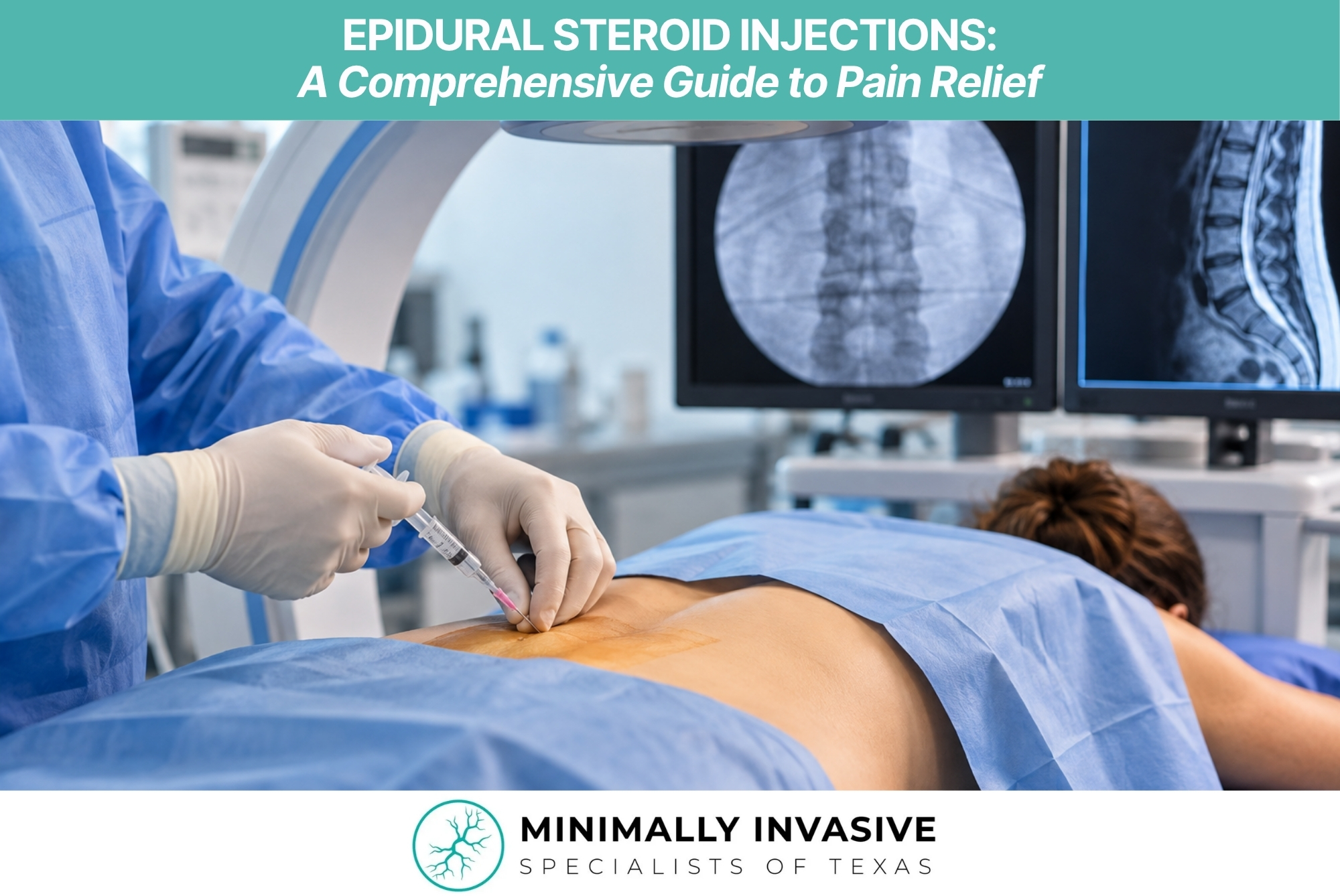
Fluoroscopy or another form of image guidance may be used to help accurately position the needle.
Contrast material may also be used when appropriate to confirm needle placement and medication distribution.
Medication Administration
Once appropriate positioning has been confirmed, medication is administered into the epidural space.
Patients may experience temporary pressure, tingling, or discomfort. Individual experiences vary.
What Should You Expect After an Epidural Steroid Injection?
Patients are generally observed for a period following the procedure and receive specific discharge instructions.
Temporary Soreness Can Occur
Some patients experience tenderness or temporary discomfort around the injection site.
Symptoms may also fluctuate temporarily before the anti-inflammatory effects of the corticosteroid become apparent.
Pain Relief May Not Be Immediate
The corticosteroid medication typically requires time to produce its anti-inflammatory effect. Some patients experience improvement relatively quickly, while others may notice changes over the following several days.
Follow Post-Procedure Instructions
Patients should follow individualized instructions regarding driving, bathing, exercise, work, medications, and other activities.
The recommendations may vary according to the procedure performed and the patient’s medical circumstances.
How Long Do Epidural Steroid Injections Last?
There is no predetermined amount of time that an epidural steroid injection will provide relief.
Some patients experience improvement lasting weeks or months. Others experience shorter-term improvement, and some patients may receive little or no meaningful benefit.
Response can be influenced by the underlying condition, severity of nerve irritation, duration of symptoms, anatomical abnormalities, overall health, and other individual factors.
An epidural steroid injection should therefore not be considered a guaranteed or permanent cure for spinal pain.
Do Epidural Steroid Injections Fix a Herniated Disc?
An epidural steroid injection does not physically remove a herniated disc.
Instead, the medication is intended to decrease inflammation around the affected nerve. This distinction is important because the procedure primarily targets the inflammatory component of the patient’s symptoms.
Reducing inflammation can nevertheless be clinically valuable. Improved pain control may allow patients to move more comfortably and participate more effectively in rehabilitation while the underlying condition is managed.
What Are the Potential Benefits of Epidural Steroid Injections?
For properly selected patients, epidural steroid injections may provide several potential benefits.
Reduced Nerve-Related Pain
Reducing inflammation around an irritated nerve root may decrease shooting, burning, or radiating pain.
Improved Mobility
When pain decreases, patients may find walking, sitting, sleeping, working, or exercising more comfortable.
Improved Participation in Physical Therapy
Reducing pain may make strengthening and rehabilitation exercises more tolerable.
Minimally Invasive Treatment
An epidural steroid injection does not require the surgical incisions or recovery associated with spine surgery.
For some patients, minimally invasive treatment may be considered as part of a stepwise approach before more invasive procedures are explored.
What Are the Risks of Epidural Steroid Injections?
Although epidural steroid injections are commonly performed, no medical procedure is completely without risk.
Potential risks and side effects can include temporary pain at the injection site, headache, bleeding, infection, medication reactions, temporary changes in blood glucose, and other complications. Serious neurological complications are uncommon but possible.
Individual risk varies according to the injection location, technique, medication, underlying medical conditions, and other factors.
Patients should discuss the potential benefits, risks, and alternatives with their treating physician before proceeding.
Epidural Steroid Injections for Sciatica
Sciatica is one of the conditions commonly associated with consideration of epidural steroid injections.
A compressed or irritated lumbar nerve root can cause pain that travels from the lower back into the buttock, thigh, calf, or foot. Numbness, tingling, or weakness may accompany the pain.
When inflammation surrounding the affected nerve contributes to these symptoms, delivering corticosteroid medication near the nerve root may help decrease inflammation.
However, because many different conditions can cause leg pain, accurate diagnosis is essential before treatment.
Epidural Steroid Injections for Neck and Arm Pain
Epidural injections may also be considered for certain cervical spine conditions.
A herniated cervical disc, degenerative changes, or narrowing around a cervical nerve root can produce pain extending from the neck into the shoulder or arm.
Patients may also experience numbness, tingling, or weakness in the arm or hand.
Because cervical epidural procedures involve important anatomical structures, careful patient selection, appropriate technique, and image guidance are particularly important.
Why Image Guidance Matters
Modern epidural steroid injections are frequently performed using fluoroscopic image guidance.
Fluoroscopy provides real-time X-ray imaging that helps the physician visualize anatomical landmarks and guide needle placement.
When appropriate, contrast material can help confirm that medication is being delivered to the intended location.
Precision is particularly important because the objective is to place medication near the suspected source of inflammation while avoiding surrounding structures.
How Epidural Injections Fit Into a Comprehensive Pain Management Plan
Pain management is rarely about a single procedure. The most appropriate strategy depends on the cause, severity, and duration of symptoms.
An individualized treatment plan may incorporate epidural steroid injections along with physical therapy, therapeutic exercise, medications, lifestyle modifications, ergonomic changes, and other minimally invasive procedures.
The objective is not simply temporary pain reduction. Effective pain management should also focus on improving mobility, physical function, independence, and quality of life whenever possible.
When Back or Neck Pain Requires Immediate Medical Attention
Not every episode of back or neck pain is an emergency. However, certain symptoms require prompt medical evaluation.
Patients should seek urgent medical attention for new loss of bowel or bladder control, numbness involving the groin or saddle area, rapidly worsening weakness, severe neurological changes, significant spinal pain accompanied by fever, or severe pain following substantial trauma.
These symptoms may indicate a serious condition requiring immediate assessment rather than routine pain management treatment.
Why Choose Minimally Invasive Specialists of Texas for Pain Management?
Persistent spinal and nerve pain can have multiple causes, which is why accurate diagnosis and individualized treatment planning are essential.
At Minimally Invasive Specialists of Texas, patients can be evaluated to determine the likely source of their symptoms and whether a minimally invasive treatment such as an epidural steroid injection may be appropriate.
With locations serving Pasadena, Baytown, Clear Lake, Houston, and surrounding Texas communities, Minimally Invasive Specialists of Texas provides convenient access to evaluation and minimally invasive treatment options for patients dealing with chronic and acute pain conditions.
Frequently Asked Questions About Epidural Steroid Injections
What is the main purpose of an epidural steroid injection?
The primary purpose is to deliver anti-inflammatory medication into the epidural space near irritated spinal nerves. Reducing inflammation may decrease radicular pain and improve function.
What type of pain responds best to an epidural steroid injection?
Epidural injections are generally used for pain associated with spinal nerve-root irritation or inflammation, particularly pain radiating into an arm or leg. They are not necessarily appropriate for every form of nonspecific back or neck pain.
Can an epidural steroid injection help sciatica?
Yes, it may help certain patients when sciatica is associated with inflammation of a lumbar nerve root. The underlying cause of the sciatica should be evaluated before treatment.
Can epidural injections help a herniated disc?
They may reduce inflammation surrounding a nerve affected by a herniated disc. The injection does not remove or repair the disc itself.
Are epidural steroid injections used for spinal stenosis?
They may be considered for selected patients with spinal stenosis who have symptoms related to nerve irritation or inflammation. Treatment recommendations depend on the patient’s individual condition.
Is an epidural steroid injection painful?
Patients may feel pressure, brief discomfort, or other sensations during the procedure. Local anesthetic is typically used to help reduce discomfort at the treatment site.
How long does the procedure take?
The injection itself is generally relatively brief, although additional time is needed for preparation and post-procedure observation. Patients should ask their care team what to expect for their specific procedure.
When will I notice pain relief?
Some patients notice improvement relatively quickly, while others require several days for the steroid’s anti-inflammatory effects to become more apparent.
How long will the results last?
Results vary significantly. Relief may last from a relatively short period to several months in some patients, while others may experience limited improvement.
How many epidural steroid injections can I have?
The appropriate number and frequency depend on the patient’s diagnosis, medical history, response to previous treatment, medication exposure, and physician’s clinical judgment. There is no universal injection schedule suitable for everyone.
Can I go back to work after an epidural steroid injection?
Return-to-work recommendations depend on the patient’s occupation, procedure, symptoms, and physician’s instructions. Strenuous activity may need to be temporarily limited.
Can I drive after an epidural steroid injection?
Patients should follow the specific instructions provided by their treatment facility. Depending on the procedure and medications administered, arranging transportation home may be necessary.
Are epidural steroid injections the same as an epidural during childbirth?
No. Although both involve the epidural space, they have different clinical purposes, medications, and treatment protocols. Epidural steroid injections are performed to address certain types of spinal and nerve-related pain.
Can epidural steroid injections raise blood sugar?
Corticosteroids can temporarily increase blood glucose in some patients. People with diabetes should discuss blood sugar management with their healthcare provider before undergoing an injection.
Can I have an epidural steroid injection while taking blood thinners?
Certain anticoagulant and antiplatelet medications can increase procedural bleeding risk. Patients should provide a complete medication list and follow individualized medical instructions. Never stop a prescribed blood thinner without direction from the appropriate healthcare professional.
Will an epidural steroid injection prevent me from needing surgery?
Some patients achieve sufficient improvement with nonsurgical treatment that surgery can be avoided or delayed. However, injections cannot replace surgery when a condition requires surgical treatment, particularly when progressive neurological deficits or significant structural abnormalities are present.
What if the injection does not relieve my pain?
If symptoms do not improve, the diagnosis and treatment strategy may need to be reassessed. Additional diagnostic testing, rehabilitation, medication changes, other minimally invasive procedures, or surgical evaluation may be considered depending on the circumstances.
How do I know if I am a candidate?
Determining candidacy requires an individualized evaluation. Your symptoms, neurological examination, medical history, diagnostic imaging, previous treatments, medications, and overall health can all influence whether an epidural steroid injection is appropriate.
Take the Next Step Toward Managing Back, Neck, and Nerve Pain
Living with persistent back pain, neck pain, sciatica, or radiating nerve pain can interfere with work, sleep, exercise, and everyday activities. When inflammation around a spinal nerve contributes to symptoms, an epidural steroid injection may provide a minimally invasive treatment option.
The key is determining why the pain is occurring and whether the symptoms are likely to respond to an epidural injection.
Minimally Invasive Specialists of Texas can evaluate your symptoms and develop an individualized treatment strategy based on your diagnosis and needs. If you are experiencing persistent back or neck pain, sciatica, numbness, tingling, or pain traveling into an arm or leg, schedule an appointment to learn more about your treatment options.
Contact Information
Minimally Invasive Specialists of Texas
Pasadena Office
4003 Woodlawn Ave
Pasadena, TX 77504
Call Us: (832) 583-2246
Fax: (832) 324-6846
Baytown Office
1642 West Baker Rd Suite C
Baytown, TX 77521
Call Us: (832) 583-2246
Fax: (832) 324-6846
Clear Lake Office
2409 Falcon Pass #100
Houston, TX 77062
Call Us: (832) 583-2246
Fax: (832) 324-6846
Website: mist-health.com
Appointments: mist-health.com/appointments/