
By Minimally Invasive Specialists of Texas
Understanding Your Options for Fibroid Treatment
Uterine fibroids—noncancerous growths in the uterus—affect millions of women, often causing heavy bleeding, pelvic pain, and pressure symptoms. When symptoms become disruptive, two leading treatment options are Uterine Fibroid Embolization (UFE) and Hysterectomy. Both can be effective, but they differ significantly in approach, recovery time, and impact on fertility.
What Is Uterine Fibroid Embolization (UFE)?
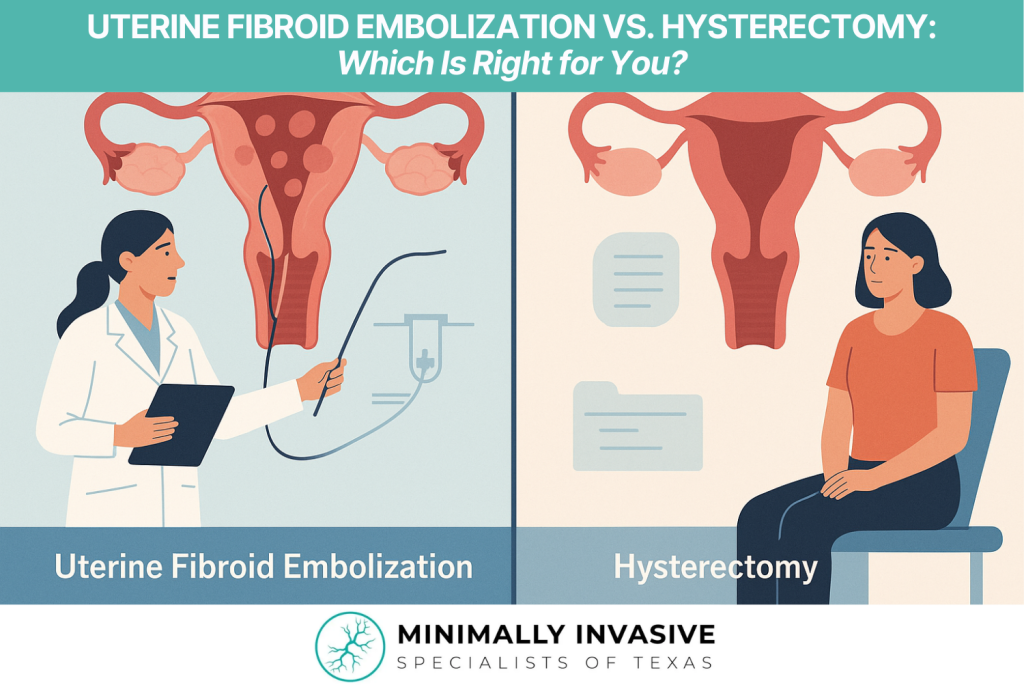
UFE is a minimally invasive, image-guided procedure performed by an interventional radiologist. Tiny particles are delivered through a small catheter in the groin or wrist to block blood flow to the fibroids, causing them to shrink.
- Key Benefits: Outpatient procedure, tiny incision, typically 1-week recovery, preserves the uterus and potential fertility.
- Ideal For: Women who want to avoid major surgery and retain their uterus.
What Is a Hysterectomy?
A hysterectomy is a surgical removal of the uterus, performed via abdominal, laparoscopic, or vaginal methods.
- Key Benefits: Permanent solution; eliminates fibroids and related symptoms completely.
- Considerations: Major surgery with 4–6 weeks recovery; ends fertility and may trigger hormonal changes if ovaries are also removed.
Side-by-Side Comparison
| Feature | UFE | Hysterectomy |
| Invasiveness | Minimally invasive | Major surgery |
| Hospital Stay | Usually same day | 1–3 days |
| Recovery Time | ~1 week | 4–6 weeks |
| Uterus Preservation | Yes | No |
| Fertility Impact | Often preserved | Ends fertility |
| Symptom Relief | 85–90% success | Nearly 100% |
Who Might Benefit Most from Each
- Choose UFE if you:
- Want a minimally invasive treatment
- Prefer a quicker recovery
- Wish to keep your uterus or maintain fertility
- Want a minimally invasive treatment
- Consider Hysterectomy if you:
- Have very large fibroids or extensive uterine disease
- Prefer a one-time permanent solution
- Are comfortable with a longer recovery and no future fertility
- Have very large fibroids or extensive uterine disease
Comprehensive Q&A
Q: Is UFE as effective as hysterectomy for symptom relief?
A: UFE provides significant symptom relief for most patients (85–90%), while hysterectomy is nearly 100% effective. Your goals—uterus preservation vs. definitive cure—are key factors.
Q: How long will it take to return to normal activities?
A: UFE patients often return to work within 7–10 days. Hysterectomy recovery can take 4–6 weeks.
Q: Will I still have periods after UFE?
A: Most women continue normal cycles, though periods may be lighter. Hysterectomy eliminates periods entirely.
Q: Are there risks with UFE?
A: UFE is very safe, but potential risks include infection, post-embolization syndrome (temporary flu-like symptoms), or rare injury to surrounding tissue.
Q: Can fibroids return after UFE?
A: Treated fibroids shrink and typically don’t regrow, but new fibroids can develop. Hysterectomy removes the uterus, so recurrence isn’t possible.
Take the Next Step
Every woman’s situation is unique. At Minimally Invasive Specialists of Texas, we provide personalized consultations to discuss your goals and help you choose the best option.
Contact Information
Address: 4003 Woodlawn Ave, Pasadena, TX 77504
Phone: (832) 583-2246
Ready to Explore Your Options?
Call today or visit our Pasadena office to schedule a consultation and discover whether UFE or hysterectomy is right for you.