
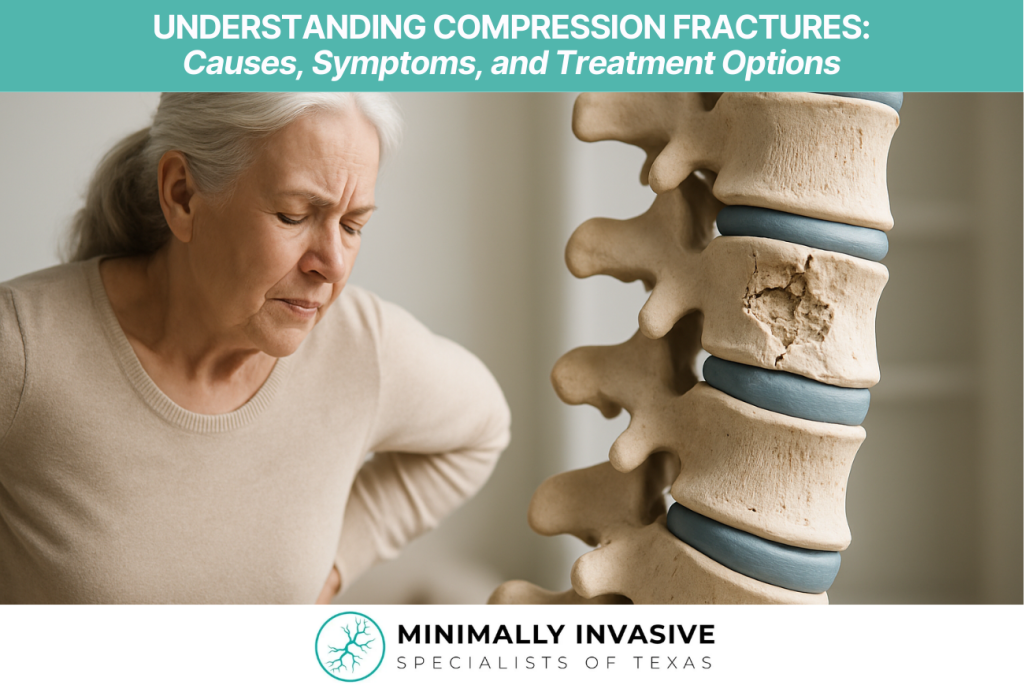
Compression fractures are small breaks or cracks in the vertebrae—the bones that form your spine. They can lead to sudden back pain, reduced mobility, and long-term spinal changes if not treated properly. At Minimally Invasive Specialists of Texas, we strive to educate and guide our patients through every step of care, helping them make confident, informed decisions.
What Are Compression Fractures?
A compression fracture occurs when one or more vertebrae collapse or break due to pressure or trauma. This condition most often affects the mid to lower spine and can range from mild to severe. While these fractures are common in older adults, they can happen to anyone after an injury or underlying bone weakness.
Causes of Compression Fractures
- Osteoporosis
The leading cause, osteoporosis weakens bones and makes them more fragile. Postmenopausal women and older adults are especially at risk. - Trauma or Injury
Car accidents, falls, or sports injuries can apply sudden force that compresses the spine. - Cancer or Tumors
Certain cancers spread to the bones, weakening the vertebrae and increasing the risk of fracture.
Symptoms to Watch For
- Sudden Back Pain: Often sharp and localized, worsening with standing or walking.
- Height Loss: Gradual decrease in height as vertebrae collapse.
- Stooped Posture: Development of a hunched or rounded back (kyphosis).
- Limited Mobility: Stiffness or difficulty bending and twisting.
If you notice any of these signs, seek medical care promptly for an accurate diagnosis.
Treatment Options
- Pain Management
Medications, bracing, and activity modification can relieve pain and reduce inflammation. - Physical Therapy
Strengthening the back and core muscles improves posture and helps prevent future fractures. - Minimally Invasive Procedures
Techniques like vertebroplasty and kyphoplasty stabilize the fracture by injecting bone cement into the collapsed vertebra. These outpatient treatments often provide rapid pain relief and faster recovery.
Comprehensive Q&A
Q: Who is most at risk for compression fractures?
A: Adults over 50, especially women with osteoporosis, and individuals with certain cancers or a history of traumatic injuries.
Q: How are compression fractures diagnosed?
A: A physical exam followed by imaging tests such as X-rays, MRI, or CT scans to assess bone damage.
Q: Can compression fractures heal without surgery?
A: Mild fractures can often heal with rest, bracing, and pain management. However, severe or unstable fractures may require minimally invasive procedures.
Q: How can I prevent compression fractures?
A: Maintain strong bones with a calcium- and vitamin D-rich diet, regular weight-bearing exercise, avoiding smoking, and limiting alcohol consumption.
Q: When should I see a doctor?
A: If you experience sudden, severe back pain—especially after a fall, accident, or if you have osteoporosis—schedule an evaluation promptly.
Contact Minimally Invasive Specialists of Texas
Address:
4003 Woodlawn Ave
Pasadena, TX 77504
Phone:
(832) 583-2246
If you are experiencing symptoms of a compression fracture or have questions about your spinal health, contact Minimally Invasive Specialists of Texas today to schedule a consultation. Our team is dedicated to providing compassionate, cutting-edge care to help you recover and stay active.