
By Minimally Invasive Specialists of Texas
Understanding Uterine Fibroids
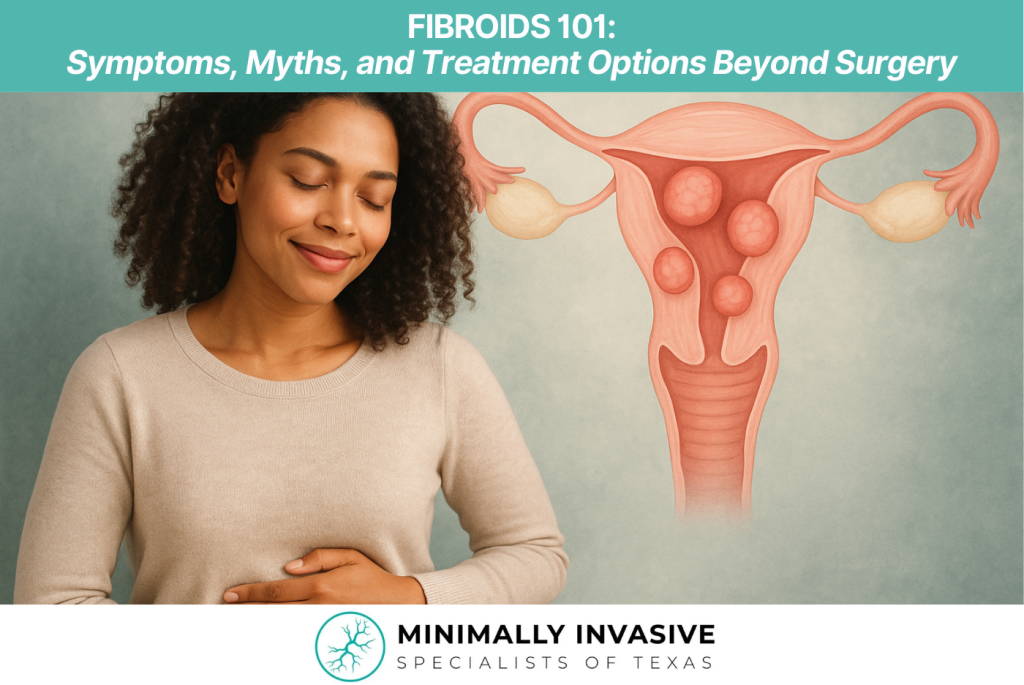
Uterine fibroids are noncancerous growths that develop in the muscular wall of the uterus. While common, affecting up to 70% of women by age 50, fibroids can vary widely in size, number, and impact on health. Many women have no symptoms, but others may experience disruptive changes to their daily life.
Common Symptoms of Fibroids
- Heavy or prolonged menstrual bleeding that may lead to anemia
- Pelvic pain or pressure, including lower back discomfort
- Frequent urination or difficulty emptying the bladder
- Constipation or bloating due to pressure on the bowel
- Pain during intercourse
- Reproductive issues, such as infertility or complications during pregnancy
Myths vs. Facts
| Myth | Fact |
| Only older women develop fibroids. | Fibroids can occur at any reproductive age, often starting in the 20s or 30s. |
| Fibroids always require a hysterectomy. | Many nonsurgical treatments, including uterine fibroid embolization (UFE), are available. |
| Fibroids always cause symptoms. | Some women never experience symptoms and only discover fibroids during a routine exam. |
| Fibroids always return after treatment. | Effective treatments like UFE can provide long-term relief with low recurrence rates. |
Treatment Options Beyond Surgery
While hysterectomy (removal of the uterus) was once the standard treatment, modern medicine offers advanced, minimally invasive alternatives:
1. Uterine Fibroid Embolization (UFE)
A minimally invasive procedure performed by interventional radiologists, UFE works by blocking the blood flow to fibroids, causing them to shrink.
- Benefits: Outpatient procedure, no large incisions, quick recovery, preserves the uterus.
- Ideal Candidates: Women with symptomatic fibroids who wish to avoid major surgery and maintain fertility potential.
2. Medications and Hormone Therapy
Short-term solutions such as hormonal contraceptives or gonadotropin-releasing hormone (GnRH) agonists may help control bleeding and shrink fibroids temporarily.
3. MRI-Guided Focused Ultrasound
A noninvasive technique that uses high-frequency sound waves to heat and destroy fibroid tissue.
4. Myomectomy
A surgical option that removes fibroids while leaving the uterus intact—recommended for those desiring pregnancy when UFE is not appropriate.
Comprehensive Q&A
Q: How do I know if I have fibroids?
A: Your doctor can diagnose fibroids with a pelvic exam, ultrasound, or MRI. Common signs include heavy periods, pelvic pressure, and frequent urination.
Q: Is uterine fibroid embolization safe?
A: Yes. UFE is an FDA-approved procedure performed by board-certified interventional radiologists with a strong safety record and minimal recovery time.
Q: Will fibroids affect my fertility?
A: Fibroids can sometimes interfere with conception or pregnancy. UFE and myomectomy can help preserve fertility for many patients. Your doctor can guide you based on your family-planning goals.
Q: How long is the recovery after UFE?
A: Most patients return to normal activities within 7–10 days—significantly shorter than the 4–6 weeks often needed after hysterectomy.
Q: Are there lifestyle changes that help manage fibroids?
A: Maintaining a healthy weight, eating a balanced diet rich in fruits and vegetables, and managing stress can help reduce symptoms and improve overall health.
Contact Minimally Invasive Specialists of Texas
Minimally Invasive Specialists of Texas
4003 Woodlawn Ave
Pasadena, TX 77504
Phone: (832) 583-2246
Our experienced interventional radiology team provides advanced, minimally invasive treatments like uterine fibroid embolization to help you regain comfort and quality of life—without major surgery.
Call today to schedule a consultation and explore your options.